
The first warning is usually small. The shower drains slowly while the washing machine empties, a toilet gurgles after someone flushes, or there is a sour smell near the cleanout by the side of the house. Then one morning the tub fills with water nobody put there.
That is when most Houston homeowners ask the same two questions: what is wrong with the pipe, and how much will this cost? Sewer line repair can be anything from a one-day fix on a cracked joint to a five-figure job under the slab. What separates the two is what the camera finds inside the line, not the age of the house or the first number someone quotes you.
This guide covers current Houston price ranges, when a spot repair is enough, when sewer line replacement is the better spend, and how to read a quote so you only pay for the work your line actually needs.
How Much Does Sewer Line Repair Cost in Houston?
Most Houston homeowners pay $1,500 to $4,500 for a localized sewer line repair and $6,000 to $12,000 or more for a full sewer line replacement. Under-slab work and long trenchless runs can pass $15,000. A sewer camera inspection to find the problem typically costs $150 to $400. These are published market ranges, not Spencer's Plumbing Services prices. For national context, see Angi's sewer line cost guide.
Estimated Sewer Line Repair Cost by Type of Work
| Type of Work | Typical Houston-Area Estimate |
|---|---|
| Sewer camera inspection and locating | $150 to $400 |
| Root clearing or line cleaning (no pipe repair) | $200 to $600 |
| Spot repair in an accessible yard | $1,500 to $3,000 |
| Short sectional pipe liner | $1,500 to $3,500 |
| Spot repair beneath concrete or a driveway | $2,500 to $4,500 |
| Short under-slab tunnel | $4,000 to $9,000 |
| Full sewer line replacement | $6,000 to $12,000+ |
| Complex trenchless or under-slab replacement | $15,000+, sometimes higher |
Your final sewer line repair cost depends on five things: what the camera shows, how deep the pipe is, what sits on top of it, whether a permit and city inspection are needed, and how much of the yard or concrete has to be put back afterward. A root blockage that only needs cleaning is a very different bill from a collapsed section under a driveway.
What Should Those Prices Include?
Two quotes for the same job can cover very different work. One may include the permit, haul-off, and concrete patch, while the other leaves those to you. Before you compare numbers, check that each quote spells out:
- Camera inspection and locating the damaged section
- Excavation, tunneling, or access pits for trenchless equipment
- Pipe, fittings, and a cleanout if one is missing or needs replacing
- Permit fees and the city inspection before backfill
- Backfill, haul-off of old pipe and soil, and final cleanup
- Restoration of sod, sprinklers, sidewalks, or driveway concrete
Warning Signs Your Sewer Line Needs Attention
Sewer problems rarely start as a sudden collapse. They build over weeks or months, and the early signs are easy to blame on a single clog. Watch for these:
- Several drains slow down or back up around the same time
- Toilets or drains gurgle when another fixture is running
- Water or sewage shows up in the lowest drain, usually a tub, shower, or floor drain
- A sewage smell inside the house or along the path of the line in the yard
- A soggy, sunken, or unusually green strip of lawn between the house and the street
- Clogs that come back within weeks of a professional drain cleaning
- More roaches coming up through drains than usual, since American cockroaches travel through broken sewer lines
One slow bathroom sink is usually a simple drain clog. Two or more fixtures acting up together points to the main line. If sewage is already coming into the house, treat it as one of the plumbing emergencies that cannot wait: stop running water, keep children and pets away from the area, and call for emergency sewer backup service.
When Is a Spot Sewer Line Repair Enough?
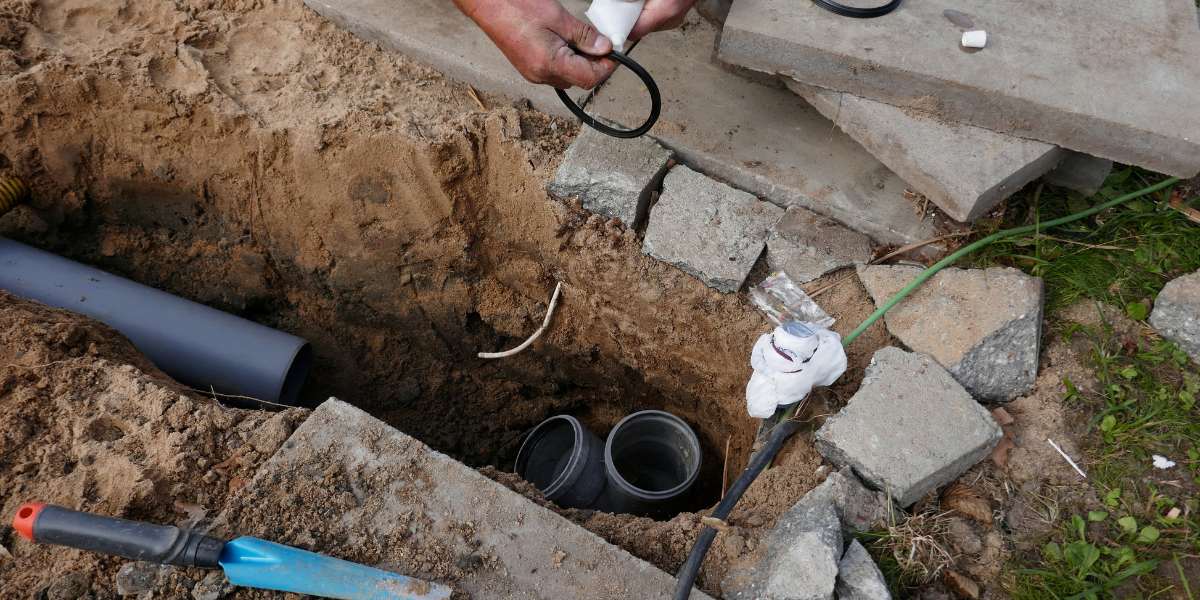
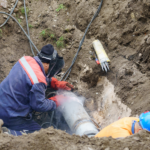
A spot repair targets one damaged section. The crew digs a pit at the problem area, cuts out the bad pipe, installs new PVC with shielded couplings, tests the line, and backfills. When the damage is in open yard and not too deep, the work is often finished in a day.
It makes sense when the pipe on both sides of the damage is in good shape and still drains at the right slope. Before you agree to one, make sure the camera footage shows the problem really is isolated.
Problems That May Suit a Targeted Repair
- One cracked section or a single separated or offset joint
- Tree roots entering through one damaged connection
- A short, accessible break beneath the lawn
- A localized leak with sound, round pipe on either side
Picture a 1970s home in Kingwood where the camera finds pine roots pushing through one joint about 30 feet from the house, with clean pipe before and after it. Repairing that one joint is a sensible fix. Replacing the whole line would mean paying for pipe that still has years of life in it.
The Limits of Repairing One Section
A spot repair cannot undo widespread corrosion or straighten a long sagging run. Old cast iron and clay often have more damage than the one break that caused the backup. If the camera shows two or three separate problem areas on an aging line, repeated spot repairs can cost as much as replacement within a few years, with more digging each time. Ask the plumber to describe the condition of the pipe beyond the repair area, especially if you have had several backups.
When Does Full Sewer Line Replacement Make Sense?
Sewer line replacement installs new pipe along the damaged run. That might be one long section, the full lateral from the house to the city connection, or, in some homes, the drain lines under the slab as well. The inspection findings, not the home's age, should decide how much pipe gets replaced. In the Houston area, sewer line replacement cost typically falls between $6,000 and $12,000, with long trenchless runs and under-slab work going higher.
Damage That Points Toward Replacement
- A collapsed or flattened section that a camera cannot pass
- Orangeburg pipe, which was used in some homes built in the 1950s and 1960s and tends to deform and fail
- Cast iron with heavy scale or channeling, where the bottom of the pipe has rotted away
- Root intrusion at many joints rather than one
- A long belly that holds standing water and keeps collecting waste
- A line that has already had several spot repairs and keeps failing in new places
Age by itself does not mean a pipe needs replacing. A 1985 cast-iron line with smooth walls and good slope can keep working for a long time. Replacement should be based on what the footage shows.
Spot Repair vs. Full Replacement: Quick Comparison
| Comparison Factor | Spot Sewer Line Repair | Full Sewer Line Replacement |
|---|---|---|
| Typical Houston cost | $1,500 to $4,500 | $6,000 to $12,000+ |
| Repair scope | Fixes one damaged section | Replaces a long section or the entire line |
| Pipe condition | Rest of the pipe is sound | Deterioration along much of the line |
| Time on site | Often one day | About 1 to 3 days trenchless, 3 to 7 days open trench |
| Property disruption | One small excavation | Larger trench or two access pits |
| Long-term value | Strong for isolated damage | Better for recurring structural failure |
| Key question | Will the remaining pipe keep working reliably? | Is the higher upfront cost worth ending repeat repairs? |
Why Sewer Line Repair Costs Vary Across Houston
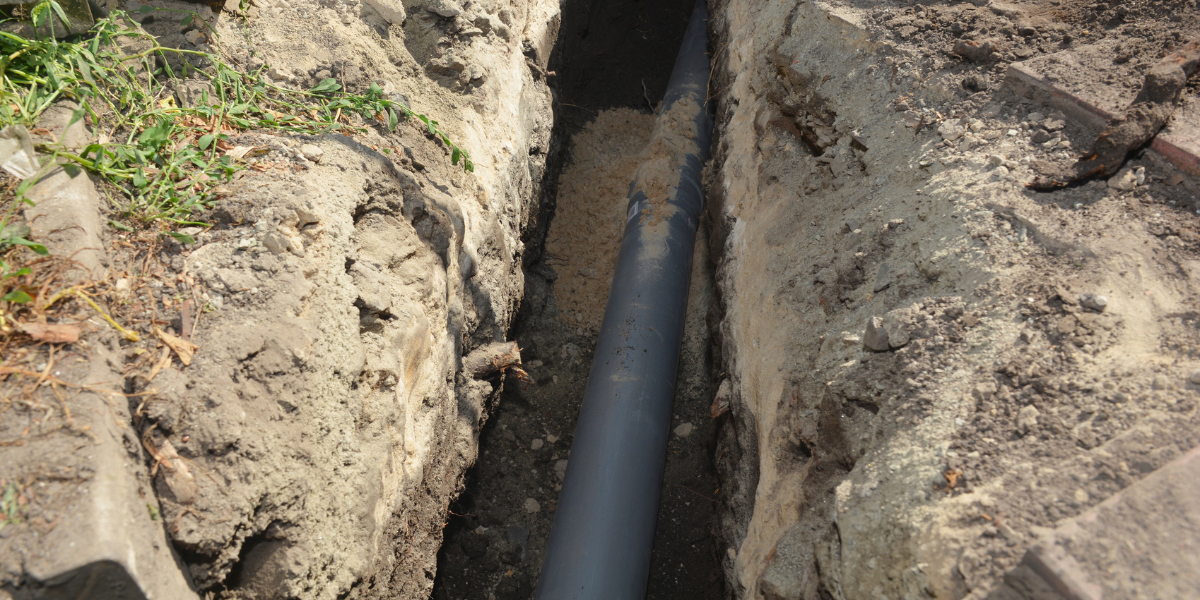
Two neighbors with the same symptom can get very different quotes. Soil, pipe material, depth, and what sits on top of the line all change the amount of labor involved.
Expansive Clay Soil and Dry Summers
Much of the Houston area sits on expansive clay that swells when it is wet and shrinks during dry spells. That constant movement stresses pipe joints and can pull them apart or push a section out of grade. Long dry stretches, like the summer of 2023, are hard on buried pipe for the same reason. Once a joint opens, roots from live oaks, pecans, and pines find the moisture and move in.
The Pipe Material Under Your Home
The kind of pipe you have often decides which repair options are realistic.
| Pipe Material | Where You Find It | Common Problems | Typical Approach |
|---|---|---|---|
| Cast iron | Many Houston homes built through the 1970s and into the 1980s | Internal scale, corrosion, channeling, cracked hubs | Spot repair for isolated cracks; lining or replacement for widespread damage |
| Clay | Older yard lines | Root intrusion at joints, offset joints, cracks | Spot repair at one bad joint; lining or bursting when many joints fail |
| Orangeburg | Some homes built in the 1950s and 1960s | Deforms, blisters, and collapses | Replacement |
| PVC or ABS | Most homes built or repiped since the 1980s | Bellies from poor bedding, joints shifted by soil movement | Spot repair or regrading the affected section |
Depth, Slab Foundations, and Hard-to-Reach Lines
Deeper lines take longer to dig and may need shoring in loose or wet soil. Driveways, patios, pools, and other buried utilities add time and restoration cost. Fixing sewer pipe damage under open grass may be simple; the same break under a driveway means cutting, removing, and pouring concrete.
Most Houston homes are built on slab foundations, so the drain lines inside the house run under the concrete. Reaching them means breaking through the floor or tunneling under the slab from outside. Tunneling costs more in labor but avoids tearing out flooring and cabinets. Before any under-slab repair, ask whether a hydrostatic test has been done to confirm the leak. If your home has had foundation repair, it is worth testing the drain lines afterward, because leveling a slab can crack or separate pipes underneath it.
Pipe Length, Permits, and Restoration
Most residential sewer laterals in the Houston area run roughly 50 to 100 feet, and longer runs mean more pipe and labor. In the City of Houston, sewer line repair and replacement generally require a plumbing permit and must be done under a Texas-licensed master plumber, with an inspection before the trench is closed. Ask who pulls the permit and whether that cost is in the quote. You can check current requirements with the Houston Permitting Center. Unpermitted sewer work can also cause problems when you sell the house.
Trenchless Sewer Repair or Open-Trench Replacement?
Trenchless methods can save a driveway, mature trees, or landscaping, but they are not always cheaper and they do not suit every pipe. Pipe condition, slope, and access decide which methods are possible, and the method you choose has a big effect on your sewer line replacement cost per foot.
| Method | Best For | Not Suited For | Approx. Cost per Foot |
|---|---|---|---|
| Open-trench replacement | Shallow lines under open lawn, bellies that need regrading, collapsed pipe | Lines under driveways, slabs, or large trees | $50 to $250 |
| Pipe lining (CIPP) | Cracked or root-damaged pipe that is still mostly round | Collapsed pipe, bellies, badly offset joints | $80 to $300 |
| Pipe bursting | Replacing a full run with new HDPE pipe along the same path | Lines with a belly, or crowded with other utilities | $60 to $200 |
For a rough idea of the math, a 60-foot pipe-bursting job at $120 per foot comes to about $7,200 before access pits, permits, and restoration. Per-foot figures come from published national cost guides, and real quotes vary with depth and access.
How Pipe Lining and Pipe Bursting Work
With lining, the crew cleans the old pipe, pulls in a resin-soaked liner, inflates it, and lets it cure into a new pipe inside the old one. With bursting, a cone-shaped head is pulled through the old line, breaking it apart while new pipe is pulled in behind it. Both need at least one access point and both follow the old pipe's path, so neither can fix a sag or a belly.
When Excavation Is the Better Choice
Digging is often the right call when the pipe has collapsed, needs to be regraded, or cannot fit trenchless equipment. It can also be the cheapest option when the line is only a few feet deep under open grass. Ask the plumber which method actually fixes the defect on your footage and what the total price covers.
Start With a Sewer Inspection, Not a Guess
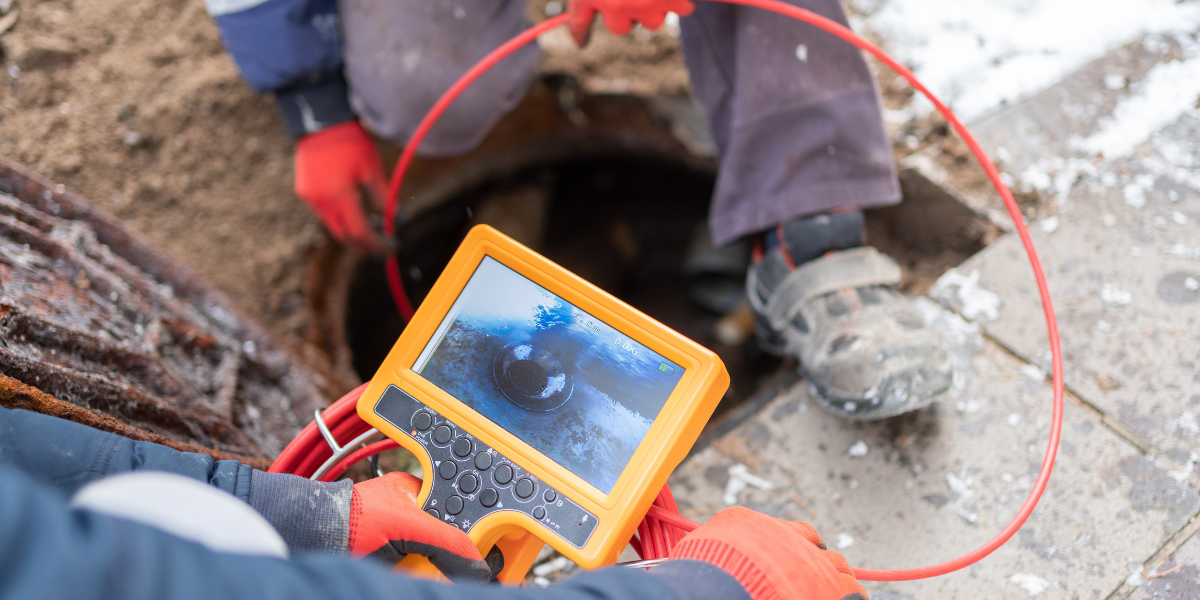
A slow drain does not tell you the cause. A camera sewer inspection is usually the smallest part of the bill, and it is the step that keeps you from paying for the wrong fix. It shows whether you have a removable clog, a broken joint, root intrusion, or a collapse before you commit to major work.
What Camera Footage Can Show
- A blockage near the cleanout rather than a broken line
- A separated joint or a crack in one section
- Standing water caused by poor slope or a pipe belly
- Root intrusion, corrosion, scale, or a collapsed section
A good report notes the distance to each defect from the cleanout and, when a locator is used, the depth at that spot, so the crew digs in the right place the first time. A residential sewer camera inspection from Spencer's Plumbing Services is done with our own camera equipment, and we walk you through the footage. If cleaning will solve the problem, replacement is not the right recommendation.
When a Sewer Inspection Is Worth It Even Without a Backup
- Before buying a home built before about 1990
- After foundation repair or leveling
- After two or more main-line clogs in a year
- Before pouring a new driveway, patio, or pool deck over the sewer path
- When large trees grow near the line
From leaky faucets to major water and sewer repairs, Spencer’s Plumbing Service has you covered 24/7.Looking For An Estimate?

Who Pays for Sewer Line Repair in Houston?
In most cases, the homeowner is responsible for the private sewer lateral that runs from the house to the public sewer connection. The utility maintains the public main. Where that line falls depends on where you live:
- City of Houston: Houston Public Works maintains the public mains. If the backup seems to come from the street or neighbors have the same problem, call 311.
- MUD-served areas: Many neighborhoods in and around Atascocita, Humble, and Spring are served by a Municipal Utility District, so the MUD operator handles the public side.
- Shared "community sewers": Some older Houston neighborhoods have private sewer lines shared by several homes. The city treats these as private, so neighbors share upkeep.
Does Homeowners Insurance Cover Sewer Line Repair?
Standard homeowners policies usually exclude wear, corrosion, tree roots, and settling, which are the most common causes of sewer line failure. A sewer backup endorsement may cover water damage inside the house but not the pipe itself, and some insurers offer separate service line coverage. Read your policy or ask your agent before the work starts, and keep the camera footage and invoice in case you file a claim.
How to Compare Sewer Line Repair Quotes Without Surprises
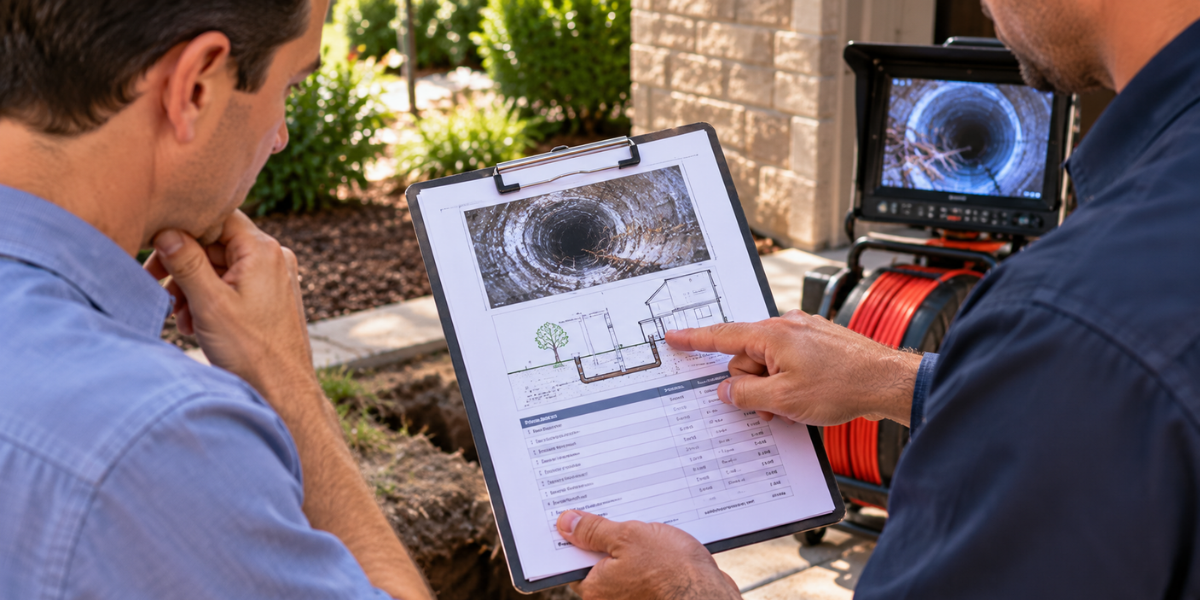
The lowest number is not always the cheapest finished job. A quote for sewer line repair should tell you which part of the line needs work, how the plumber plans to reach it, and what happens to the yard or driveway afterward. That level of detail lets you compare estimates fairly.
Ask for a Written Scope, Not a Single Price
- The exact section and estimated length being repaired
- The proposed pipe material and repair method
- Whether permits, inspections, and cleanup are included
- Who pays for concrete, irrigation, or landscape restoration
- How long the job will take and whether you can use your plumbing during it
If the camera shows one isolated crack but the quote recommends a whole-line replacement, ask the plumber to explain why the rest of the pipe cannot be kept. The footage and written findings should support the recommendation. For an expensive replacement, getting a second opinion from another licensed plumber is reasonable.
Red Flags in a Sewer Quote
- Replacement is recommended without footage you can watch
- The plumber will not share the video or the written findings
- Pressure to sign the same day for non-emergency work
- No mention of a permit for work that needs one
- Restoration is left vague or missing
Warranty Terms and Unexpected Damage
Ask what the workmanship warranty covers, how long it lasts, and what it excludes. Also ask how the company handles extra damage found once the digging starts. Any change to the original scope should be explained and approved before the extra work goes ahead.
Sewer Line Maintenance After a Repair
Good sewer line maintenance is mostly about habits and keeping records:
- Save the inspection footage and report so the next plumber has a baseline
- Put cooking grease in the trash, not down the sink
- Flush only toilet paper. "Flushable" wipes do not break down the way paper does
- If roots were the problem, schedule a cleaning or camera check every one to two years
- Keep the cleanout cap visible and easy to reach
- Plant new trees well away from the sewer path
If several fixtures back up at once after a repair, stop running water and call a plumber before the problem spreads.
Get Clear Answers Before You Commit to a Major Repair
Before you approve a major repair, you should know where the damage is, why it happened, and whether a smaller fix would solve it.
Talk to a Local Plumber About Your Options
Spencer's Plumbing Services serves Houston, Kingwood, Humble, Atascocita, Spring, The Woodlands, and nearby communities. Our work is done under Responsible Master Plumber license RMP #45302. We start with a camera diagnosis, show you the footage, and put the scope in writing before any digging. Financing is available for larger repairs. Concerned about your sewer line? Call 832-658-2569 or contact us to schedule a sewer inspection and get a recommendation for your home.
Frequently Asked Questions
Is It Cheaper to Repair or Replace a Sewer Line?
A spot repair costs less upfront, usually $1,500 to $4,500 in the Houston area. If several sections of the pipe are failing, replacement can cost less over time than paying for repeated repairs.
How Long Does Sewer Line Repair Take?
Many spot repairs in open yard are finished in a day. Trenchless replacement usually takes one to three days, and open-trench replacement can take three to seven days, plus time for the city inspection and restoration.
Can Tree Roots Be Cleared Without Replacing the Pipe?
Often, yes. Cutting or jetting the roots restores flow, but the joint where they got in is still open. Without repairing or lining that spot, the roots usually grow back.
Does a Sewer Camera Inspection Show Every Problem?
It shows the inside of the pipe the camera can reach, including cracks, roots, bellies, and offsets. It may not reveal every leak under a slab, so some under-slab problems need a hydrostatic test as well.
Do I Need a Permit for Fixing a Sewer Pipe in Houston?
In the City of Houston, sewer line repair and replacement generally require a plumbing permit and must be done under a licensed master plumber. Rules differ outside city limits, so ask your plumber to confirm before the work starts.
How Long Does a New Sewer Line Last?
Properly installed PVC or HDPE pipe can last 50 years or more. Cured-in-place liners are commonly designed for a service life of around 50 years, depending on the product and installation.
Who Pays for a Damaged Sewer Line in Houston?
Homeowners are usually responsible for the private lateral from the house to the public connection, and the city or MUD maintains the public main. Responsibility can vary by neighborhood, so check with your utility if you are unsure.