
Have you ever walked into your utility room, glanced at your water heater, and wondered if those rust-colored stains or discolored pipes were normal? Or maybe you’ve stepped into your morning shower and asked yourself why the water suddenly smells metallic. Could these be signs of corrosion on your water heater?
Most homeowners rarely think about their water heater until something goes wrong, like no hot water, strange noises, or an unexpected puddle under the tank. But what if one of the biggest threats to your water heater’s lifespan is something slow, quiet, and often invisible at first? Something that develops over months or years without a sound? That threat is water heater corrosion.
Corrosion is one of the leading reasons water heaters fail earlier than they should, especially in cities like Houston, where humidity, mineral-rich water, and high usage take a toll on plumbing systems. Understanding what causes corrosion, how to spot it early, and what you can do to prevent a corroded water heater can save you thousands of dollars and a whole lot of stress.
Let’s break it down together.
What Exactly Is Water Heater Corrosion?
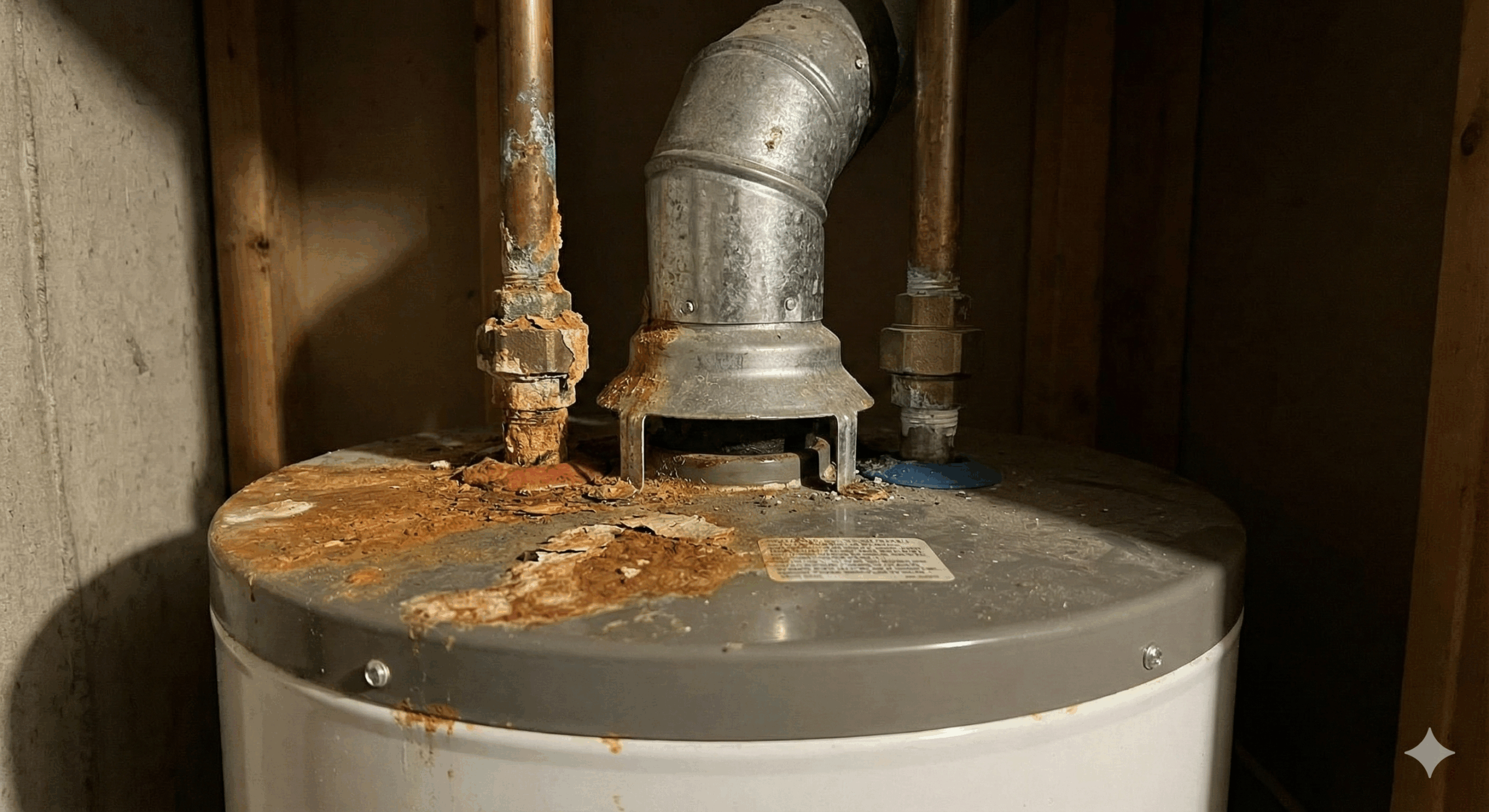
Water heater corrosion is the natural breakdown of metal components due to reactions with water, minerals, oxygen, or electrical currents. Over time, these reactions weaken the tank structure, pipes, fittings, and heating elements.
But here’s something most homeowners don’t realize:
Corrosion doesn’t begin on the day your water heater fails; it begins years earlier.
It starts silently, often in places you can’t immediately see:
- Inside the tank
- At the connections
- Along the anode rod
- Around the drain valve
- Near the hot-water outlet
A water heater is designed to handle heat and pressure, but corrosion slowly undermines both. Once the metal weakens enough, leaks, ruptures, and performance issues begin.
This brings us to the next important question…
Why Does Corrosion Happen in Water Heaters?
Corrosion happens for the same reason a car rusts or metal tools degrade due to exposure to water, oxygen, and minerals. But in a water heater, the conditions are especially ideal for corrosion to accelerate.
Let’s go through the most common causes.
Houston’s Hard Water Accelerates Mineral Breakdown
Have you ever noticed white chalky buildup on your faucets or shower heads? That’s calcium and magnesium. These minerals are extremely common in Houston’s water supply.
These minerals settle inside the tank and create:
- Hot spots
- Irregular heating
- Layering on metal parts
- Stress on the anode rod
The more sediment buildup, the faster corrosion forms.
A Worn-Out Anode Rod
Have you ever wondered why a water heater has a metal rod inside it? The anode rod is a sacrificial component, designed to corrode so the tank doesn’t.
But once it’s used up?
Your tank becomes the next target for corrosion.
A worn or missing anode rod is one of the top reasons homeowners end up with a corroded water heater years earlier than expected.
High Humidity - A Houston Special
Houston’s climate is known for heat and humidity. Combine moisture in the air with a hot metal tank, and you get:
- Exterior rust
- Moisture on fittings
- Accelerated oxidation
- Corrosion on the bottom of the heater
Humidity alone can weaken a tank even if the water inside is well-maintained.
Heat + Pressure = Faster Chemical Reactions
Water heaters operate under:
- High temperatures
- High pressure
- Constant water exposure
That creates the perfect environment for metal breakdown.
Every time your heater cycles, it expands and contracts slightly. Over time, micro-fractures or worn coatings lead to corrosion.
Electrical Grounding Problems
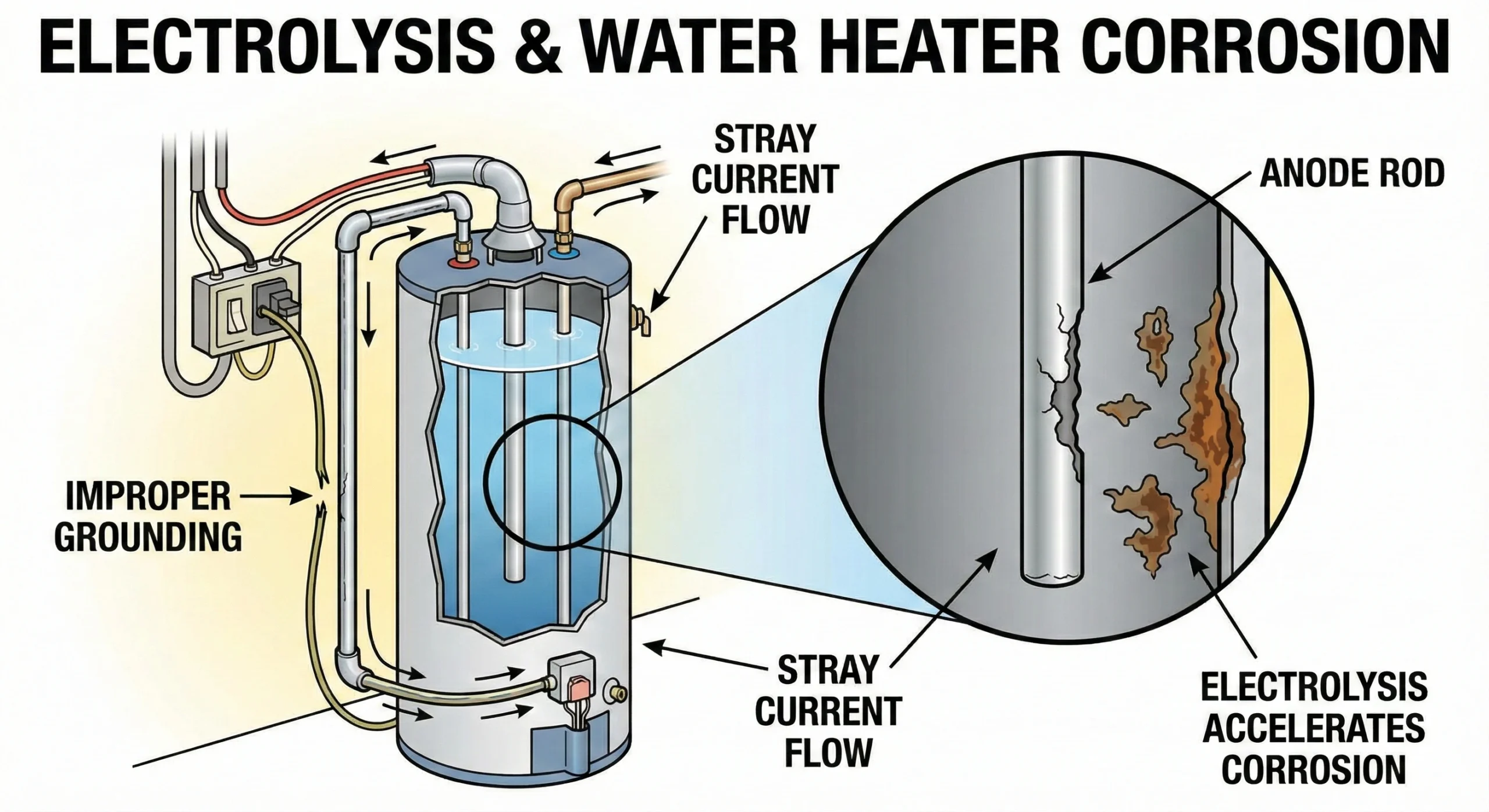
Many homeowners are surprised to hear that stray electrical currents can cause water heater corrosion.
This includes:
- Improperly grounded electrical systems
- Faulty wiring
- Shared metal pipes transferring current
The process is known as electrolysis, and it speeds up deterioration dramatically.
How Do You Know If Corrosion Has Started?
Most people only recognize corrosion when it becomes obvious. But by then, it’s often too late.
Let’s start with an important question:
If your water heater could talk, what would it tell you months before it fails? Here are the most common early signs of corrosion on water heater systems.
- Rust-Colored Water
If you turn on the hot tap and see yellow, brown, or reddish water, your tank may be corroding from the inside. Then find out - If the rust is coming from the faucet, or from deep inside your heater?
- Water That Smells Metallic
A metallic or iron-like odor points to oxidized components inside the heater.
- Rust on the Tank Exterior
Look around:
- The bottom seam
- Pipe connections
- Top fittings
- Drain valve
- Temperature and pressure valve
Even small rust spots can indicate larger issues inside.
- Water Around the Base of the Heater
Is it a leak or a corrosion breakthrough? Often the latter.
A corroded water heater eventually forms microscopic pinholes. These are impossible to repair once they start.
- Rumbling or Popping Noises
Sediment buildup traps water beneath it, causing noise and accelerating internal corrosion.
- Flakes in the Water
Metal flakes in hot water are a clear sign that the tank is deteriorating.
Looking For An Estimate?
From leaky faucets to major water and sewer repairs, Spencer’s Plumbing Service has you covered 24/7.

Why is Water Heater Corrosion So Dangerous?
Many homeowners don’t immediately see corrosion as a high-priority issue. After all, the tank still heats water. It still works… for now.
But corrosion causes several serious dangers:
- Sudden Tank Failure
A corroded tank can rupture unexpectedly, spilling 40–50 gallons of hot water onto floors, walls, or electrical systems.
- Mold Growth
Leaks slow enough to go unnoticed cause moisture damage in walls and flooring.
- High Energy Costs
Corrosion reduces heating efficiency. The heater must run longer and harder.
- Reduced Water Quality
Rust-contaminated water is unpleasant and unsafe for many household uses.
- Increased Pressure Risk
Pressure builds when corrosion blocks valves or narrows pathways.
A water heater may not be the most exciting appliance in the home, but it’s definitely among the most important ones to keep an eye on.
What Questions Should You Be Asking Right Now?
Here are the same questions we encourage homeowners to consider during inspections:
- How old is my water heater?
- Have I ever replaced the anode rod?
- Do I have hard water, and has it been affecting my plumbing?
- Is the tank located in an attic, garage, or utility closet exposed to humidity?
- Have I seen any rust stains near fittings or seams?
- Do I flush the tank yearly?
- Is my water heater making a noise?
These questions help you determine whether your heater is in the early, middle, or late stages of corrosion.
Can a Corroded Water Heater Be Repaired?
Here’s the truth Houston homeowners need to know:
If the tank itself has corroded, it cannot be repaired.
This is non-negotiable. Corrosion inside the tank's metal means structural failure has already begun.
However, all hope is not lost; you can fix corrosion-related issues before they reach the tank wall.
These are repairable:
- Faulty anode rods
- Corroded fittings
- Rust on pipes
- Corrosion inside valves
- Sediment buildup
A corroded tank? Replacement is the only safe option.
How to Prevent Water Heater Corrosion in 2025?
💧
🧪
🌬️
⚙️
🔍
👨🔧
Houston’s climate makes prevention especially important. Here’s how to stay ahead of corrosion.
- Replace the Anode Rod Every 3–5 Years
This is your water heater’s first line of defense. Ask yourself: When was the last time I checked it?
- Flush the Water Heater Yearly
Flushing removes mineral sediment that accelerates corrosion.
- Install a Water Softener If You Have Hard Water
Hard water destroys heaters faster than almost any other factor.
- Keep Your Utility Room Ventilated
Moisture feeds oxidation, and it can help you better.
- Install an Expansion Tank
Helps stabilize pressure and reduce internal stress.
- Inspect Fittings Twice a Year
Corrosion often starts in small, hidden areas.
- Schedule Routine Professional Inspections
A trained eye detects corrosion long before homeowners do.
How Long Should a Water Heater Last?
A healthy unit lasts:
- 8–12 years for standard tank heaters
- 12–15+ years with excellent maintenance
- 5–8 years if corrosion is left unchecked
Age plus corrosion equals a higher risk of failure.
When Should You Replace a Corroded Water Heater?
Consider replacement when:
- Rust-colored water appears regularly
- The tank is making loud popping noises
- The anode rod is fully depleted
- Multiple fittings show rust
- You see water around the base
- Your heater is more than 10 years old
- The tank exterior shows swelling
A corroded water heater is a structural hazard, not a cosmetic issue.
Final Thoughts
Corrosion may start small, but it remains one of the most important issues to keep an eye on. When you understand what causes water heater corrosion, how to recognize the early signs, and what to do when corrosion on water heater parts first appears, you protect your home from costly damage, sudden leaks, and cold mornings you didn’t plan for.
Paying attention to subtle changes like unusual smells, rusty discoloration, or moisture collecting around the seams can help you act before the problem grows. In a city like Houston, where humidity and hard water accelerate wear, staying ahead of these signs isn’t simply good practice; it’s part of keeping your home running safely and efficiently.
If you ever feel unsure about what you’re seeing or want a trusted opinion, our team at Spencer's Plumbing Services is always here to help. We inspect, repair, and replace water heaters throughout Houston, and we’re committed to giving you clear answers and long-lasting solutions.